ESG
ESG
From convictions to measurable results
DPG Media has been making targeted investments in diversity and inclusion for years. Quite simply, this is because we’re convinced that a diverse team creates better media. Different perspectives lead to more interesting outcomes.

Melanie van Hemert
(50), CPO - People & Sustainability
A mission and a conviction like that are all very well, but they only gain value when they produce results. Changing unconscious patterns and taking an honest look at where things aren’t going well yet are central to our broad ESG policy. That’s why we use data to test our choices. For example, we critically examine the entire career path of our 6,000 employees: from recruitment and remuneration to social safety and participation in our talent programmes.
If the figures don’t match our ambitions, we review our decision-making. After all, the principle is simple: equal opportunities. Nothing more, but certainly nothing less either. If inequality exists in a large organisation like ours, that often means we haven’t looked at talent objectively enough.
Until recently, our data mainly gave us insight into gender diversity. This is paying off: we can now take highly targeted action to promote equal opportunities for men and women. For instance, we’re seeing this reflected in the narrowing of the gender pay gap.
In 2025, we took an essential next step: mapping cultural diversity. We already have many valuable initiatives to raise awareness, but we now also want to know whether they’re actually having an effect. By registering the backgrounds of our media makers, we created a ‘data mirror’ in this area as well.
We know that recording cultural backgrounds is a sensitive issue, which is why this has led to good and necessary discussions within our organisation. We encourage that, because without friction you won’t gain any insights, equal opportunities or, ultimately, progress. Only by looking honestly at the facts can we guarantee genuine equal opportunities. We’re happy to share the first results of this new approach in the 2026 annual report.

Reducing our ecological footprint


Pillar:
Reducing our ecological footprint
We’re reducing our impact on the planet and working towards a 63% reduction in CO2e over a twelve-year period.
Ahead of our sustainability target
Looking back on 2025, we can proudly conclude that we reduced our greenhouse gas emissions more sharply than our target required. In other words, we’re ahead of schedule. And now that the consequences of climate change are becoming ever greater and more noticeable, this progress is especially important. We have a duty to reduce as much as possible, in a responsible way.
Publishing fewer physical newspapers and magazines is one of the reasons for this reduction. More important, however, are the sustainability measures we have taken in recent years. We’re now seeing the impact of these efforts – and it’s exactly this kind of structural progress that’s needed.
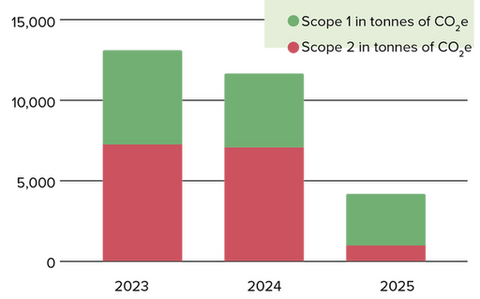
The move from outdated office buildings to Mediavaert, energy-saving measures in existing buildings, and the purchase of sustainably generated electricity have led to a sharp reduction in emissions in scopes 1 and 2.
The electrification of the company car fleet has also made a major contribution. At this point, 62% of lease cars are electric. In the Netherlands, where many colleagues travel by private or public transport, the renewed mobility policy is having an effect: proportionally more kilometres are being travelled in (plug-in) hybrid and electric cars.
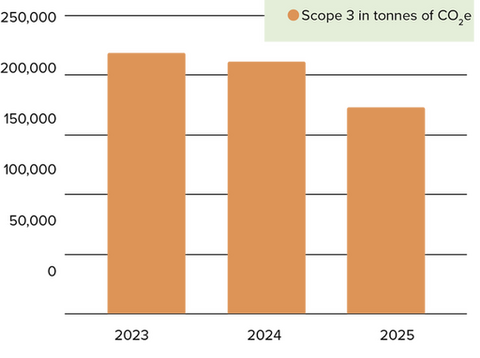
Looking at our production chains (scope 3), we see that emissions from our physical newspapers and magazines are falling because we’re making greener choices, as the story on Operations in the following pages shows.
The CO₂e footprint included in this annual report includes RTL Nederland. This also applies to the figures for 2023 and 2024. This is standard practice under the prescribed reporting rules (GHG Protocol).
Our streaming and TV activities are also taking steps in the area of sustainability. For an increasing number of productions, the actual footprint is being mapped. And once you start measuring, you can also reduce in a targeted way. This is reflected in the figures: emissions per hour of content produced fell by 9% when comparing 2025 with 2023.
Sustainability is about behavioural change. This isn’t something that happens overnight, but once it becomes embedded in our thinking and actions, we achieve the results that are needed.

Paul Vereijken
(38), ESG MANAGER
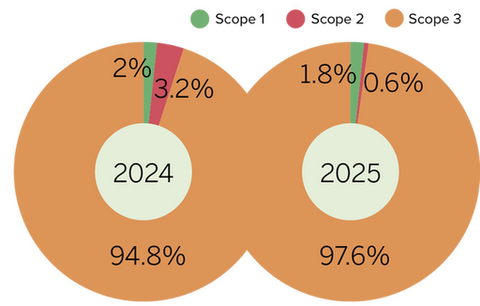
Scope 1
Comprises all emissions that are the direct result of using company buildings or cars.
Scope 2
Covers the emissions associated with all energy that is purchased.
Scope 3
Is the broadest category. It comprises the emissions of everything that is purchased (such as paper, TV productions and hardware), distribution of newspapers and magazines, energy use of rented buildings, waste and travel.
target and co2e footprint
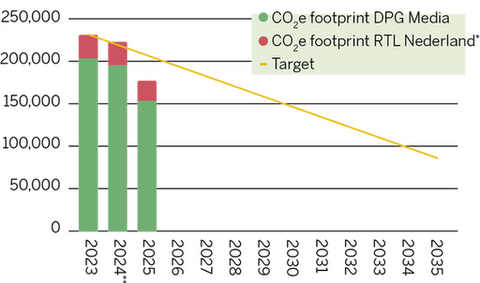
* In accordance with the GHG Protocol, RTL Nederland has been included, with 2023 as the base year.
** Excluding the construction of Mediavaert
Scope 1 & 2
Scope 3
ratio scope 1, 2 and 3
Achievements 2025
The sharp decline in scope 1 and 2 is mainly due to the purchase of wind energy of Belgian and Dutch origin for offices, printing facilities and depots in both countries.
The further electrification of the vehicle fleet also contributed. At this point, 62% of lease cars are electric.
Energy-saving measures in Vilvoorde and the installation of a heat pump at the printing facility in Amsterdam account for the remaining reduction within scopes 1 and 2.
The paper we purchase for our own newspaper printing facilities is 14% less CO2e-intensive (2025 compared with 2024).
In collaboration with production companies, RTL and VTM are working on measuring and reducing the footprint of programmes. Emissions per hour fell by 9% (2025 compared with 2023).
Using hardware sparingly: the Tech department focused on replacing hardware less frequently. Belgian employees, for example, can choose to replace their smartphone every four years with a higher-quality device, rather than every two years.
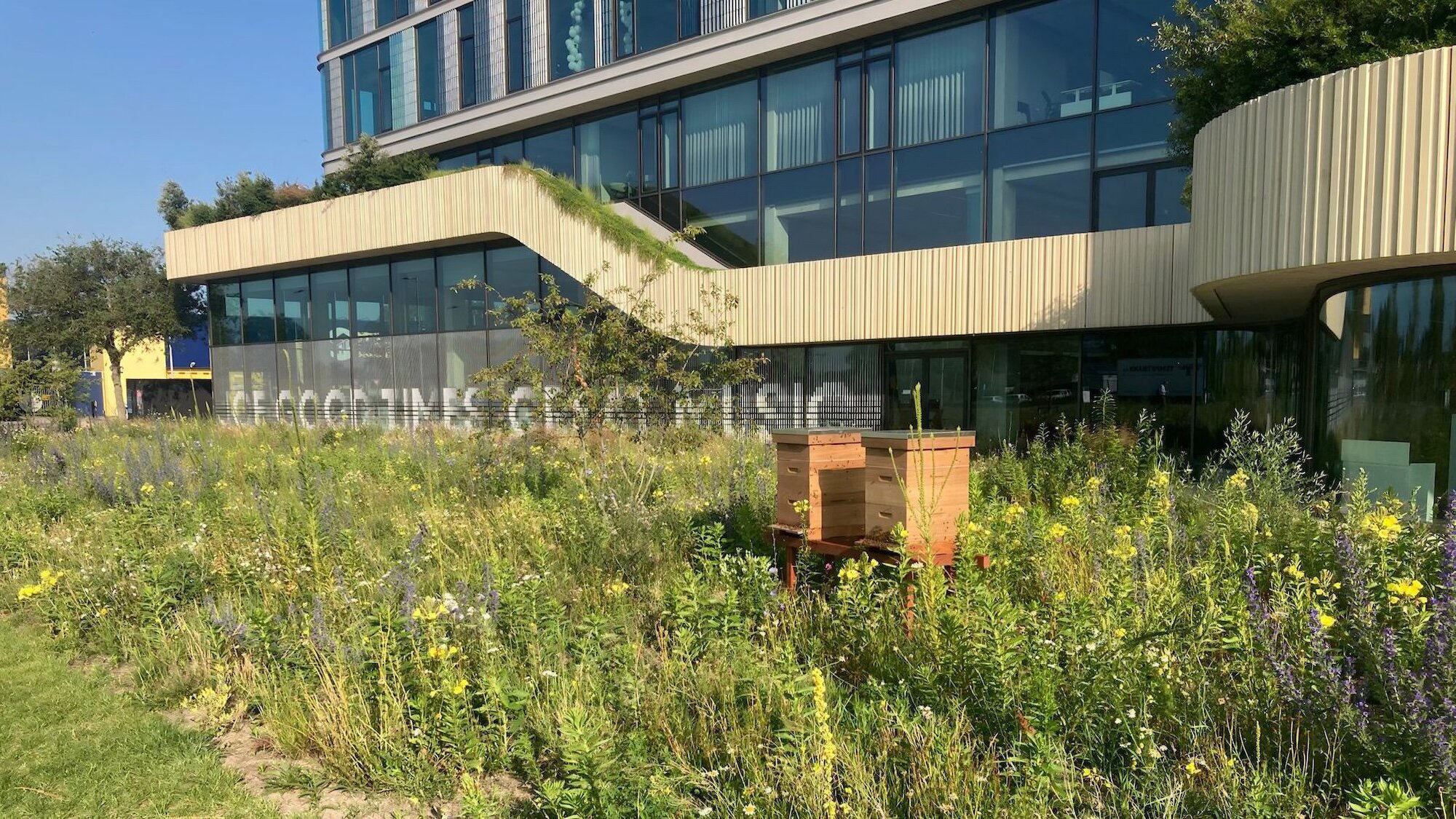
Small efforts make a difference: in Amsterdam and Vilvoorde, beehives were placed near the offices, in addition to previously created wild gardens, insect hotels and swallow nesting boxes.
Sustainability In Operations
“Almost 14 per cent lower emissions through different newsprint”
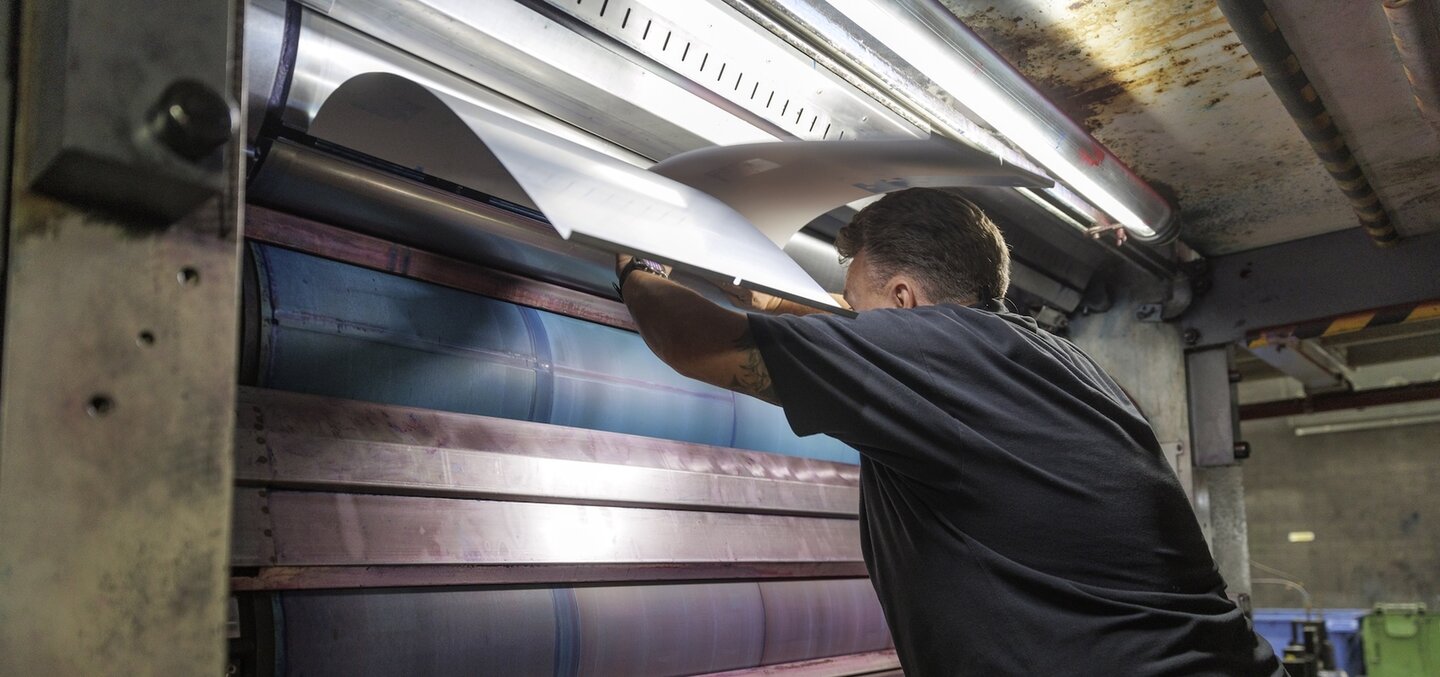
Within DPG Media, Operations accounts for the largest share of CO2e emissions. This department, which is responsible for printing and distributing newspapers and magazines, plays a key role in achieving our reduction targets. Within Operations, Lotte Ruijter is the project manager responsible.
Important steps have been taken in recent years. Thanks to a heat pump, the printing facility in Amsterdam was able to stop using gas, and almost all magazines are no longer sealed in plastic. While results like these represent major steps in the right direction, more measures are needed to achieve our target.
In 2025, ESG policy within Operations therefore moved into a new phase, in which sustainability has been structurally embedded in strategic decision-making. The focus is both on meeting reduction targets and on complying with relevant laws and regulations, including the European Deforestation Regulation (EUDR).
Over the past year, intensive efforts have therefore been made to analyse and harmonise supplier data. Emissions from raw materials – especially paper – are a decisive factor in the footprint of Operations. “By making data from our suppliers measurable and comparable, we can steer impact in a targeted way,” Ruijter explains. “This enables us to determine where we source our raw materials based on quality, price and sustainability.” The effect of such analyses is clear: the emissions associated with 1,000 kilograms of newsprint were almost 14% lower in 2025 than a year earlier.
Because part of production takes place at external partners, Operations is also in close dialogue with these printing facilities. “We want to know their emissions exactly and understand how they plan to reduce them,” says Ruijter. In this way, it will become increasingly clear in the coming years which partners DPG Media can work with responsibly in the long term.
Lotte Ruijter
(38), project manager for Sustainability

Strong and independent journalism

Pillar:
Strong and independent journalism
Every day, we work on the independence, reliability and reach of our journalism.
Transparency and trust are essential to journalism
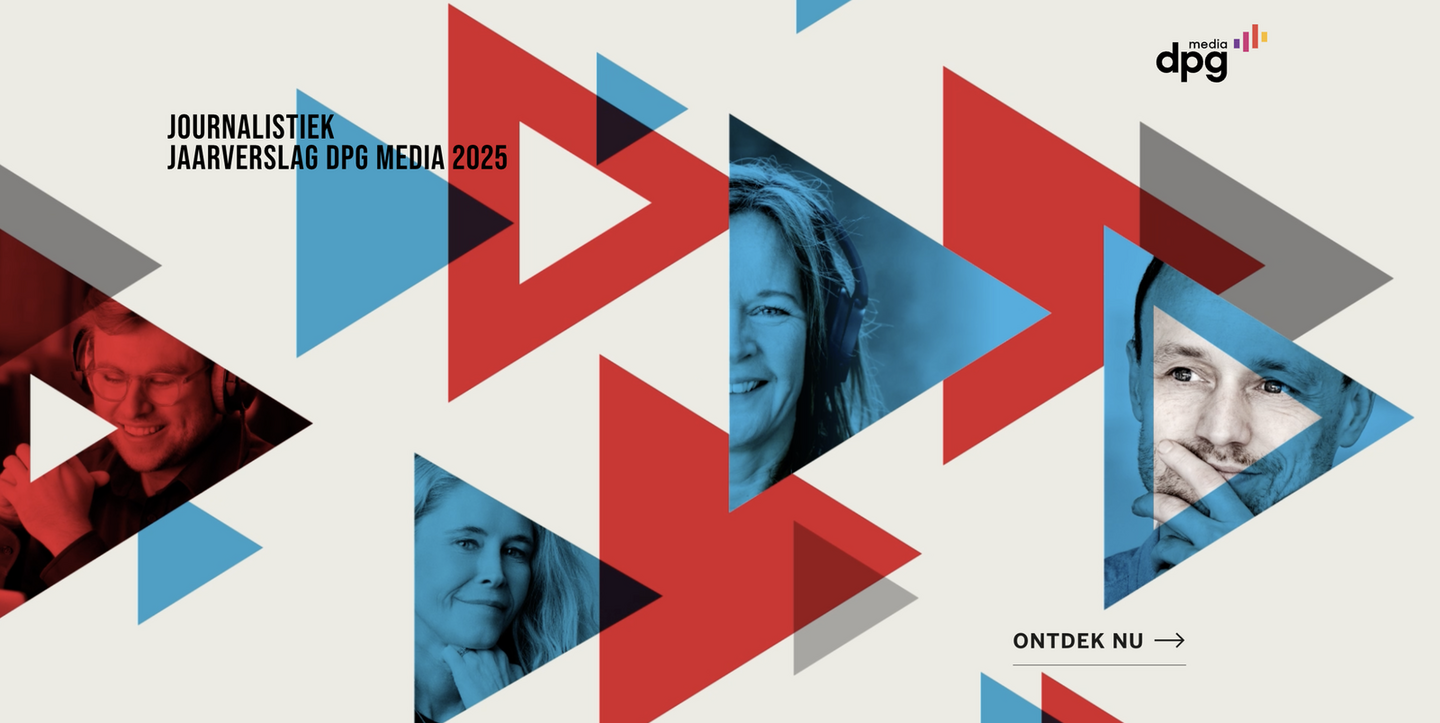
In DPG Media’s other annual report – the Journalism Annual Report for 2025 – the editors-in-chief of all news titles discuss the journalistic dilemmas that arise behind the scenes. These range from decisions about covering the murder of Lisa to the questions about whether full names should be used in news reports.
It is becoming increasingly important to show how journalism is made. In the past, a well-produced end product was enough. But in the age of smartphones and social media, journalism must work harder to earn the trust that once came more naturally. That is why reporters increasingly offer audiences insight into how their stories are developed and produced.
In the Journalism Annual Report, editors-in-chief discuss issues that make journalism challenging. We also publish essays on AI and the authenticity of journalism. We show how the independence of editorial teams within the group is safeguarded. And we present the hard figures on reach, subscriptions and numbers of journalists.
This is the second time we are publishing the Journalism Annual Report. Fourteen Dutch and three Flemish titles are featured. When RTL became part of DPG Media in 2025, we suddenly gained a large, strong and independent editorial team. As a result, RTL Nieuws became the newcomer in the 2025 Journalism Annual Report.

Philippe Remarque
(60), Director of Journalism
Read the 2025 Journalism Annual Report (in Dutch)


Responsible use of AI and data

Pillar:
Responsible use of AI and data
We keep our data footprint as small as possible and use AI in a transparent and responsible way.
The ethical test for new technology
The rapid developments in data and AI bring with them a wide range of ethical considerations. The conversation about what is the right thing to do is multifaceted and must be conducted thoroughly.
That is why scientists from Utrecht University, together with DPG Media, developed the Data Ethics Decision Aid (DEDA) specifically for the media sector. “I’m proud that DPG Media looks beyond the applicable legislation and is working towards a trusted relationship with its users by carefully testing data and AI applications against our values,” explains Melvin Maas. In addition to his role as DPG Network Manager, Maas sits on the internal guidance committee for this project.
“A large group of colleagues from different departments helped test and shape it, which has made it a highly relevant, practical and crucial tool. DEDA identifies unexpected ethical bottlenecks that we can solve before launching a new data or AI application.”
“This tool helps make complexity more manageable,” says Karen van Es, who is involved as a scientist and associate professor. “By documenting the decision-making process, it provides a basis for accountability to a range of stakeholders, both inside and outside an organisation.”
DEDA works through carefully designed questions that encourage the professionals involved to reflect together on various ethical aspects. These include questions about what data are being used, what biases this may reinforce, how people can influence the algorithm and how an AI application is continuously evaluated. The questions are presented on a large table poster, similar to a board game.
The risks identified during these discussions are translated into follow-up actions, making it clear what still needs to change before a project can be launched. At the end of May, DEDA will become available to the entire media sector.

Melvin Maas
(34), DPG Network manager
Figures
Reports of potential data breaches: 40
High-risk data breaches: 0
Medium-risk data breaches: 4
Digital advertising revenue from the open market: 3.7%

Inclusive organisation and media

Pillar:
INCLUSIVE ORGANISATION AND MEDIA
We’re actively building an inclusive organisation and inclusive media. Our organisation must offer room for everyone’s talent, and our media room for everyone’s perspective.
Using numbers to improve diverse representation
Within DPG Media, diverse representation in programmes is addressed in various ways. Leen Lombaert (VTM) and Sander Heithuis (RTL) emphasise how important it is for viewers to see themselves reflected in television programmes. “Everyone should be able to recognise themselves.”
The ambition is for our media to reflect society, Lombaert explains. According to her, that is where the social power lies: in every viewer, listener and reader feeling represented in programmes. “The world outside is often more inclusive than what we sometimes show in the media.”
For a number of years now, diversity has been counted manually, Heithuis and Lombaert explain. This is also a method used by the BBC. They started with male/female ratios, but now look much more broadly – for example at cultural background and physical or mental disability. “Old-school tallying creates awareness that goes beyond numbers alone,” says Lombaert.
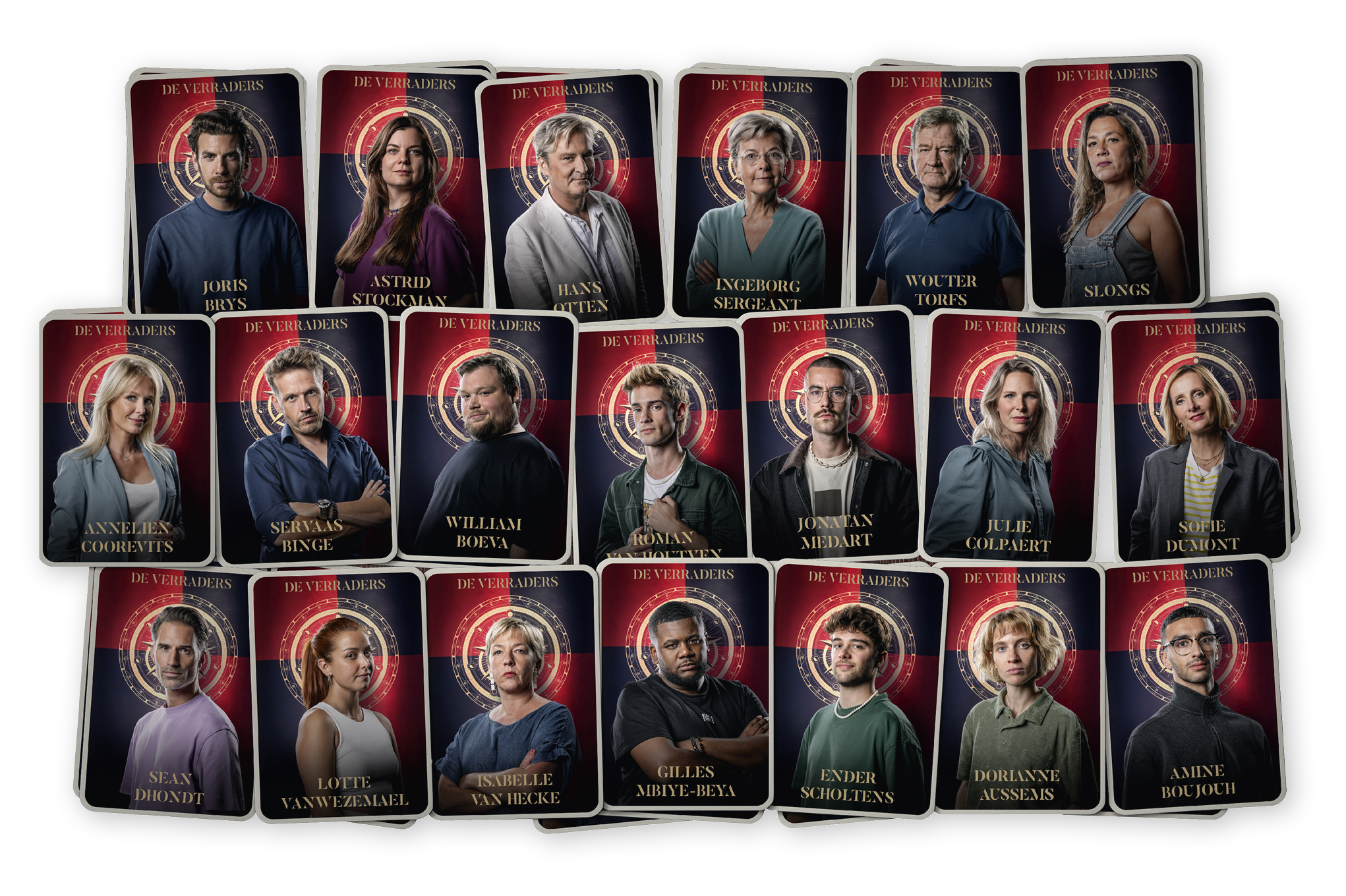
According to her, the success of the method lies in its pragmatic approach without hard targets. “Quality and awareness are central. It’s about handling the measured figures properly and focusing smartly on titles where we can actually make an impact, such as the daily soap Familie, De Verraders and Dancing with the Stars.”
The role of popular programmes acts as a catalyst. “Ten programmes determine 75% of how viewers experience media.” So this is where the key to change lies.
Dozens of RTL and VTM employees keep track of diversity figures for different programmes, which are then evaluated. “Not a day goes by without discussion about the balance around the talk show tables,” says Heithuis. “This makes diversity top of mind for our media makers and producers.”
The counting also shows what is already going well. “After counting the participants in an entire season of a quiz show, we discovered that the male/female balance was exactly 50:50.” This appears to have been a conscious choice by the producer. “Which is excellent, and shows up as such in the evaluation.”
“EditieNL is another programme where the figures show a very positive development. It clearly pays a great deal of attention to the representation of women, both in street interviews and in the selection of experts, because those figures have increased significantly over the past year and a half. All these examples show that counting allows us to have a much more concrete conversation about diversity.”
The fact that this approach is supported at the top helps enormously. “It’s a long-term process, but it makes diversity a daily conversation in the workplace,” says Heithuis.

Leen Lombaert
(48), Head of Non-Scripted

Sander Heithuis
(31), Senior Communication Advisor, ESG
Figures
- M/F balance (all employees): 55/45
- M/F balance (senior management): 67/33
- M/F balance (key leadership and talent programmes): 50/50
- Gender pay gap: -1.7%
- Social safety score: 8.3/10
The figures above exclude RTL Nederland. RTL Nederland will be included in these figures from the 2026 annual report onwards.
Achievements 2025
For the third year in a row, DPG Media organised joint iftar meals in Rotterdam, Amsterdam and Antwerp, bringing together almost 200 colleagues. The evenings focused on connection and reflection. In this way, both Muslims who were fasting and colleagues who joined them got to know each other better in an informal setting. Participants described it as a valuable moment of inclusivity, centred on sharing culture and mutual understanding.
In March 2025, the fourth edition of the journalism talent traineeship began with 14 participants without a formal journalistic background. In close collaboration with our editorial teams, Campus and Academy, these talents were trained to become versatile media makers through a combination of learning and practical experience. With this initiative, we continue to invest in broad entry routes into journalism.
We continue to safeguard inclusivity by applying diversity as a fixed criterion in talent identification, selection for the Talent Community, key leadership programmes and succession for key positions. By monitoring diversity closely, we work towards equal opportunities in promotions, evaluations and pay across the entire organisation, regardless of background, gender or other personal characteristics. Active knowledge-sharing and peer sessions were organised for HR and management to help recognise and reduce unconscious bias.
For the first time, RTL organised live audio description during recordings of Holland’s Got Talent and The Voice of Holland, allowing visually impaired and blind audience members to follow the programmes from the studio. From now on, all Videoland Original drama series will also include audio description.
Through our participation in Antwerp Pride and Amsterdam Pride, we voiced our support for the queer community and for the importance and urgency of LGBTQIA+ emancipation.

Employee development and growth


Pillar:
Employee development and growth
We invest in the development of our media makers on a personal, social and technological level.
Investing in the leaders of the future
Anniek Swillens and Justin Mol began DPG Media’s Media Executive Programme in 2024 with an open mind. Together with eighteen others, they spent more than a year and a half moving through the company and learning what it takes to lead it as successfully as possible. “When the time comes, we need to be ready to say: now it’s up to us.”
Selecting a diverse group of twenty future leaders was a conscious choice. As the company grows, different disciplines and generations increasingly need one another to shape a successful future.
It was also a deliberate decision to include ten men and ten women, in order to experience in practice what a mix of feminine and masculine qualities can bring, and to invest in a more diverse composition at the top of the company. “Building future and balanced leadership for the organisation in this way is essential,” says Mol.
For a year, the group worked through four modules. They started with Leading self and others, which examined the personal leadership of each participant and the interaction within the group. This was where they discovered that everyone leads in their own way. “Some people are soft leaders, while others take the lead from the front,” says Swillens. “It’s precisely these different styles that are needed in the kind of company we are.”
The ten women and ten men also immersed themselves in the modules Leading business and Leading DPG Media. These focused on collaboration and effective communication to enable company-wide decision-making and execution. All aspects of the organisation were covered, from finance and editorial to marketing and sales.
By exploring one another’s expertise, they came to understand each other better and better. “Everyone contributed the challenges from their own discipline. Because we spent a lot of time together, we also had deeper conversations, resulting in a kind of openness,” says Swillens. “This included the freedom to clash, but in a safe environment,” adds Mol. Barriers gradually disappeared and everyone in the group was able to make their voice heard. This is exactly what helped them move forward.
The final module focused on innovation. The need for the company to keep innovating is obvious. To gain inspiration, the group visited Adobe, Amazon Music and The Wall Street Journal, among others.
“As future leaders, the experiences from this programme allow us to shape and communicate a shared perspective for DPG Media,” says Swillens. Mol adds: “The world is coming at us fast, and when the time comes, we need to be ready and able to say: now it’s up to us.”

Anniek Swillens
(37), Director of Advertising Technology

Justin Mol
(36), Head of Newsroom Product & Innovation
Figures
A total of 1,397 training courses were available in 2025, of which 475 focussed on digital transformation, 464 on leadership and 458 on professional skills.
In 2025, colleagues completed a total of 51,939 hours of training, of which 20,613 on digital transformation, 17,031 on professional skills and 14,295 on leadership.
The figures above exclude RTL Nederland. RTL Nederland will be included in these figures from the 2026 annual report onwards.
Achievements 2025
In 2025, the advanced leadership programme was fully renewed. Two new groups have now started this new programme. Through inspiring training days, practical exercises, personal coaching and peer learning, leadership is firmly embedded in practice. This ensures that our leaders continue to develop on themes that directly contribute to their daily practice and to the organisation as a whole.
In its training courses, the Academy increasingly connects people from different parts of the company, so that colleagues who may not meet in their daily work still get to know one another and learn from each other. The Academy also makes frequent use of internal specialists on innovative themes such as AI. This cross-pollination enables us to develop even more relevant training courses, for and by our own colleagues.
To continuously safeguard the quality and depth of our independent journalism, the Campus made targeted investments in more customised development programmes. Under the guidance of expert Henk van Ess, eleven editorial teams received additional, intensive and fully tailor-made training courses on responsible use of AI in journalistic research. By deliberately choosing small groups for these full-day sessions, we were able to guarantee maximum individual attention and build specific investigative skills among our journalists.

Giving back to
society

Pillar:
Giving back to society
We use our professional expertise and talents to create opportunities for people in vulnerable situations.
Nurturing new tech talent with our expertise
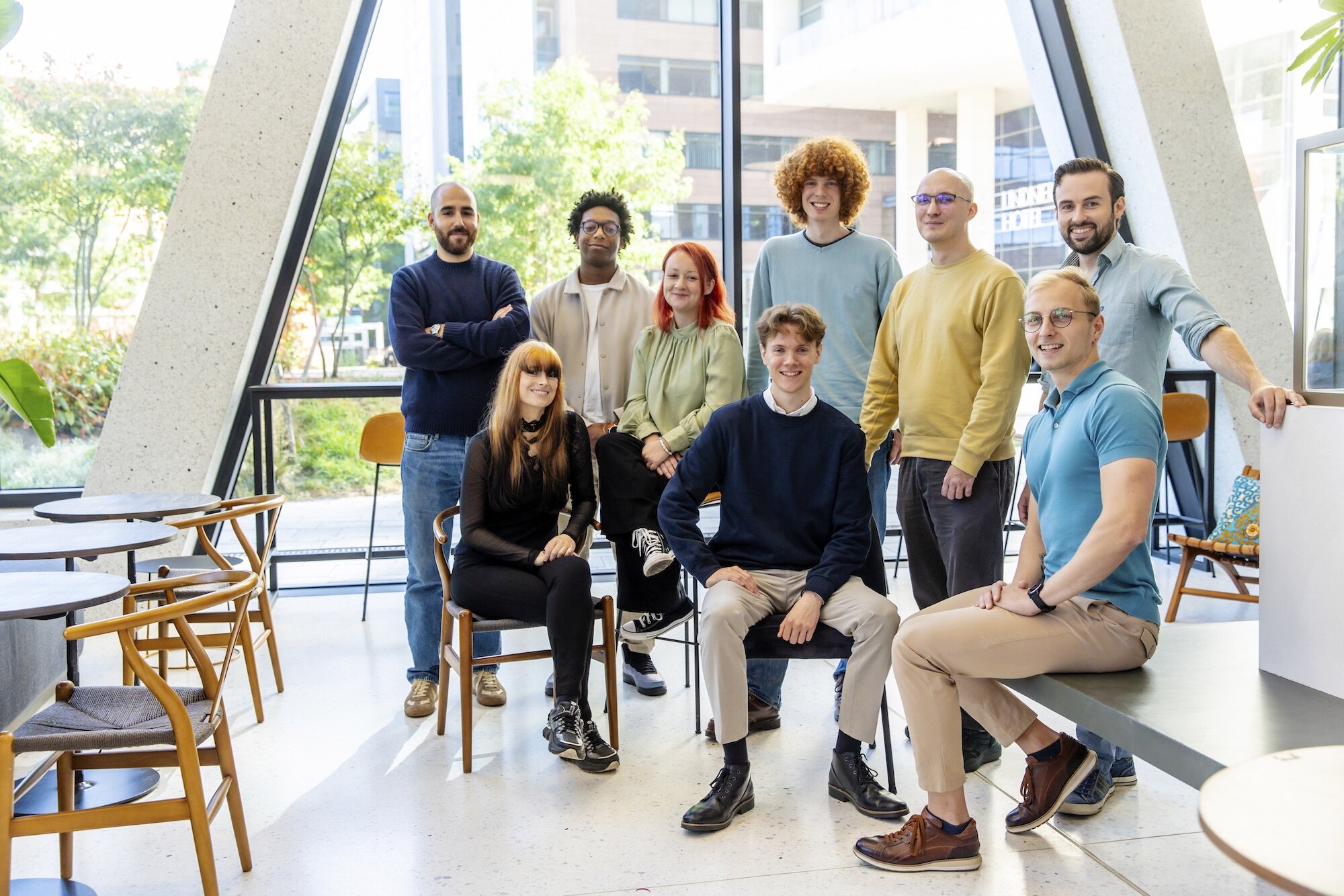
With the Developer Academy, DPG Media lowers the threshold of the labour market for diverse tech talent entering the field from other backgrounds. The second cohort of this traineeship started in September 2025, and last year the initiative crossed the border and expanded into the Netherlands.
In close collaboration with training partners 42 Belgium (Belgium) and Codam (the Netherlands), we create opportunities for motivated students from diverse backgrounds. Professionals reorienting their careers and young people entering tech outside traditional educational pathways often bring a broad range of experiences and perspectives.
Entrants through 42 Belgium or Codam do not need diplomas or prior education, and the programmes themselves are free of charge for participants: DPG Media and other partners fully cover the costs and facilities.
Throughout the programme, trainees are intensively supported by experienced DPG Media tech professionals. With the guidance of a buddy, they turn the theoretical knowledge they acquire into concrete practical experience in a complex digital environment.
After successfully completing the programme, trainees have the opportunity to take up a permanent position within our teams, where their continued development as tech professionals takes centre stage. In doing so, we not only strengthen the company’s innovative capacity, but also take responsibility for lowering barriers for diverse talent in the labour market. A person’s commitment and talent should determine their opportunities, not whether they have followed a traditional career path.
This is exactly what Karin Beutels finds so valuable about this initiative. Closely involved in the Academy through the Talent Team (People & Sustainability), Beutels says: “The most rewarding thing about the Developer Academy is seeing how motivated talents, with the right support and a healthy dose of personal commitment, only need a very short time to grow into valuable colleagues who truly make a difference in our teams.”
Achievements 2025
In Amsterdam, DPG Media provides a safe home for 80 independent journalists from Russia. Journalists from The Moscow Times, TV Rain and Meduza are based in DPG Media’s Amsterdam office. Being here allows them to continue doing their work independently and freely.
In addition to making news widely accessible to students, DPG Media donates 5,000 free newspaper subscriptions every year to people in the Netherlands and Flanders who would otherwise be unable to afford one. This ensures that a vulnerable group in society remains well informed.
In 2025, JOE raised €1,623,425 with ‘Pakje van je Hart’. Thanks to this heart-warming campaign, thousands of children growing up in vulnerable situations in Flanders still received a present under the Christmas tree.
As a partner of Children’s Book Week and the Children’s Jury, DPG Media contributes to reading enjoyment among children in the Netherlands. With De Grote Kinderboekenzoeker, thousands of children found their favourite book, with special attention for children with dyslexia or for whom reading can sometimes be difficult.
DPG Media strongly values the mindset of elite sport. As a member of the TeamNL business pool, DPG Media supports elite athletes in making the transition to the labour market and building a sustainable career alongside and after their sporting careers.
The Sidekick Sam Academy supports Flemish teachers in strengthening the mental resilience of young people. By the end of 2025, more than 8,500 teachers had already registered on the platform. The Academy is supported by wellbeing and education experts, including ambassador Professor Dirk De Wachter.
RTL Boulevard organised an action week together with the Armoedefonds. The goal was to help 6,000 people living in poverty get through the winter with warm essentials. This was achieved: thanks to many donors, 6,223 people were helped.
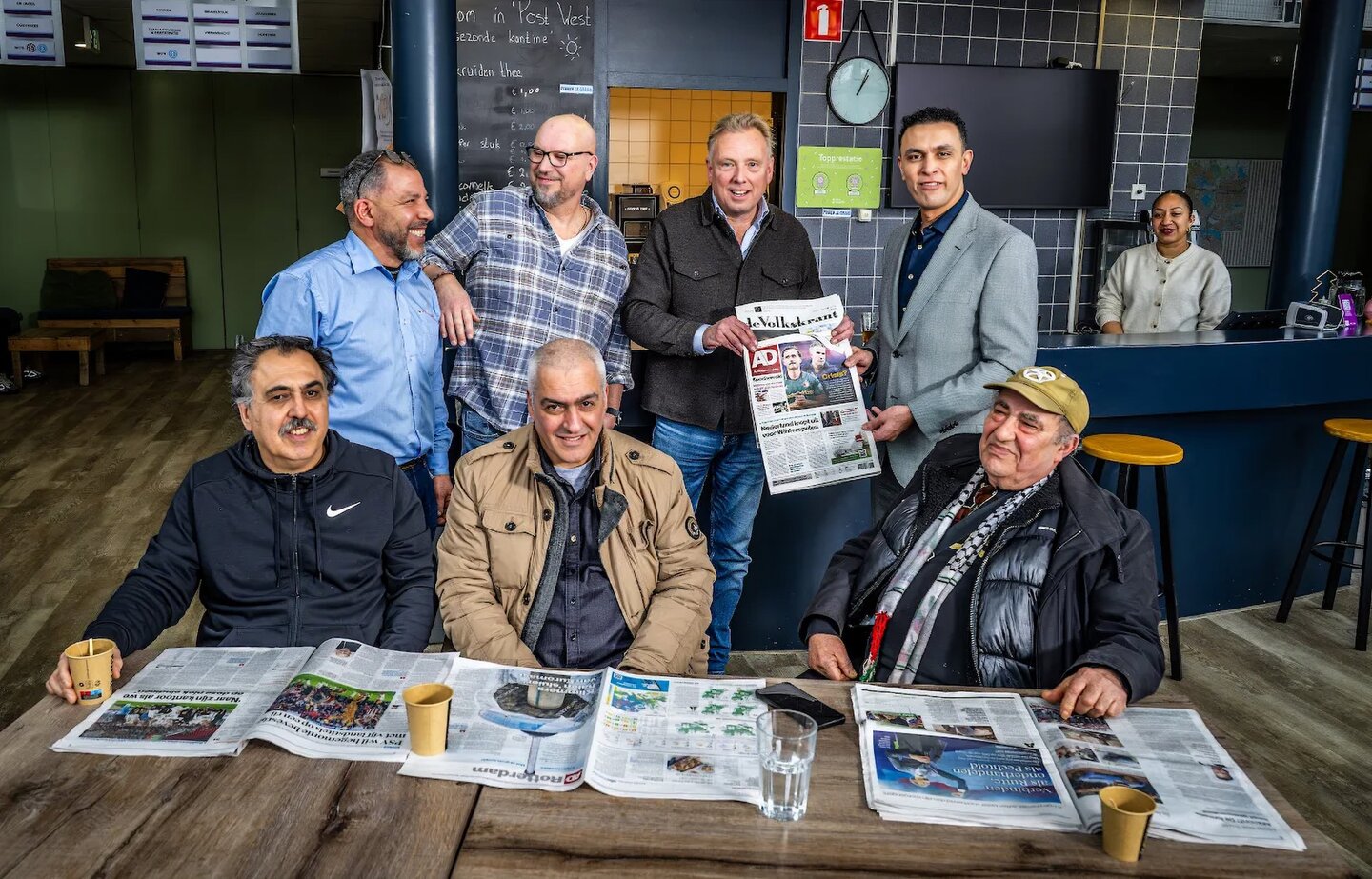
Yildirim, Hassan and Jasar (from left to right) in the community centre in Rotterdam-West, where AD regional editor-in-chief Paul van den Bosch and alderman Faouzi Achbar (standing on the right) delivered the first newspapers.
The newspaper at the heart of the neighborhood
Bringing the news closer to people: this is the goal of the collaboration that DPG Media has entered into with provinces and municipalities in the Netherlands. People can now read the newspaper free of charge every day in hundreds of community centres.
What started as a modest initiative was further expanded in 2025. DPG Media, four provinces and a large number of municipalities have now joined forces to close the gap in news consumption. In this way, reliable news is made accessible to everyone, regardless of financial means.
In Rotterdam, 53 community centres are participating. In the provinces of Zeeland and North Brabant, 310 of them joined the kick-off. Together with the hundreds of locations in the provinces of Gelderland and Overijssel that had already started earlier, the project now reaches 775 community centres across the country – and that number continues to grow.
DPG Media makes titles such as PZC, Eindhovens Dagblad and De Gelderlander available at a reduced rate, while local authorities facilitate the initiative. This ensures that residents who cannot easily afford a subscription always have access to quality journalism. Research by Radboud University underlines the social value of this: reading a regional newspaper increases people’s connection to their local environment and stimulates dialogue within communities.
“By bringing the newspaper to places where people come together, we reduce the divide in society and keep news accessible to everyone,” says Allard Besse, director of AD and the regional newspapers. “The ambition is for even more cities and provinces to join,” adds Vincent Mostard, who maintains contact with municipalities and provinces on behalf of DPG Media. “In this way, we continue to build an informed and engaged society together, directly through the community centres.”

